 ultimate-guide
Relocating to Idaho From California: A 2026 Guide
Table of Contents
- Why Californians Are Relocating to Idaho in 2026
- Cost of Living in Idaho vs. California
- Cost of Moving From California to Idaho
- Best Places to Live in Idaho for Newcomers
- Moving Checklist for an Interstate Move
- Climate and Seasonal Weather Differences
- Employment, Wages, and Healthcare Access
- Making the Move: What to Do Before You Arrive
- Frequently Asked Questions
Last Updated: October 12, 2026
Why Californians Are Relocating to Idaho in 2026
Relocating to Idaho from California has become one of the most discussed moves in the country, driven by a simple math problem: households that can no longer make the numbers work in California often find they can in Idaho. This guide from Scott Pearce covers what that move actually looks like in practice, from the tax transition to the neighborhoods. The pattern is well documented by the U.S. Census Bureau's state-to-state migration data, which has tracked Idaho among the fastest-growing states for several years running.
Population Growth and Migration Trends
Idaho's population growth accelerated sharply during the pandemic years, and the state has continued absorbing newcomers since. The Idaho Department of Labor's population and migration reports document the trend in detail. What most coverage misses is that this is not purely a California story. Newcomers arrive from Washington, Oregon, Utah, and Arizona too, which means the competition for homes in Ada and Canyon County comes from every direction.
Lifestyle and Cultural Differences
The pace is the first thing people notice: shorter commutes, lighter traffic, immediate outdoor access. Culturally, Idaho leans more rural and conservative than coastal California, and that adjustment often takes longer than the move itself.
Cost of Living in Idaho vs. California
The cost of living in Idaho vs. California is the biggest factor driving the move, but the headline housing gap hides the parts of a budget that decide whether you come out ahead. Housing, income tax, and property tax usually favor Idaho; utilities, insurance, and some groceries run closer than expected, and wages are lower. Compare a full monthly budget, not a median home price.
Housing Affordability and Median Home Prices
Housing affordability is where the two states diverge most: a budget that buys a modest condo in much of California can buy a detached home with a yard in the Treasure Valley. Prices have risen in Boise, Meridian, and Nampa, but the gap remains wide. Two mechanisms matter more than sticker price:
- Assessed value vs. market value. California caps annual assessment increases on a primary residence under Proposition 13, so a long-held home can carry a tax bill far below its market value. Idaho reassesses at market and applies a homeowner's exemption, so your first Idaho tax bill is based on what you actually paid.
- Levy-based property tax. Idaho property tax is driven by the levies of the overlapping districts where you live, county, city, school, fire, library. Two homes at the same price in adjacent neighborhoods can carry different bills because the levies differ.
| Factor | California | Idaho |
|---|---|---|
| State income tax | Graduated brackets, top marginal rate on high earners | Flat rate on taxable income above the filing threshold |
| State sales tax | Statewide base plus local district taxes | Statewide base plus local option taxes |
| Property tax | Roughly 1% of assessed value plus voter-approved bonds, capped assessment growth | Levy-based on market value, homeowner's exemption, capped budget growth |
| Housing | Median price far above national average | Median price below national average |
| Utilities | Mild coastal climate, lower heating load | Hotter summers, colder winters, higher heating and cooling load |
Taxes and Take-Home Income
Taxes and take-home income deserve a closer look than most moving guides give them. Idaho levies a flat income tax rather than California's graduated brackets, and property taxes work differently when comparing a California assessed value to an Idaho taxable value.
Run your own numbers rather than trusting a rule of thumb:
- Estimate Idaho withholding on your expected Idaho wages using the state's flat rate, then compare to your California withholding at the graduated rate.
- Add back the local picture. Idaho cities and counties layer local option taxes on specific items, and your property tax depends on the levies where you buy.
- Account for the transition year. If you split the year between states, you may file a part-year return in each, and California can tax income you earned while still a resident.
- Check retirement and investment income. Idaho taxes most retirement income but offers specific exclusions; California's treatment differs, so model your actual sources.
Establishing Residency, Registration, and Licensing
The tax comparison only holds once you become an Idaho resident, a paperwork sequence most guides skip:
- Establish a domicile. Sign a lease or close on a home, then update your address with the postal service, banks, employer, and insurers.
- Get an Idaho driver's license. New residents typically need one within a set window after establishing residency, and you will surrender your California license. Bring proof of identity, Idaho address, and your current license.
- Register your vehicles. Idaho requires registration after you establish residency, with Idaho fees and, where applicable, sales tax on the vehicle's value if not previously registered in Idaho. This is often the largest surprise line item.
Keep a single folder with your closing statement, Idaho license, vehicle registration, and utility bills. It is the fastest way to prove residency if a state, lender, or insurer asks.
A Realistic Monthly Household Budget
Home prices are the headline, but the monthly budget is what you live on. Build it line by line, comparing both states on the same categories:
- Housing: mortgage or rent, property tax or renters insurance, HOA dues.
- Utilities: electricity, gas or propane, water, sewer, trash. Idaho's wider temperature swings push heating and cooling costs higher than coastal California.
- Insurance: homeowner's or renter's, auto, and umbrella policies. Rates vary by county and wildfire or winter risk.
A household that keeps a California salary while living in Idaho usually comes out well ahead. A household that takes a local Idaho wage often finds housing savings partly offset by the pay cut. Model both scenarios before you commit.
Cost of Moving From California to Idaho
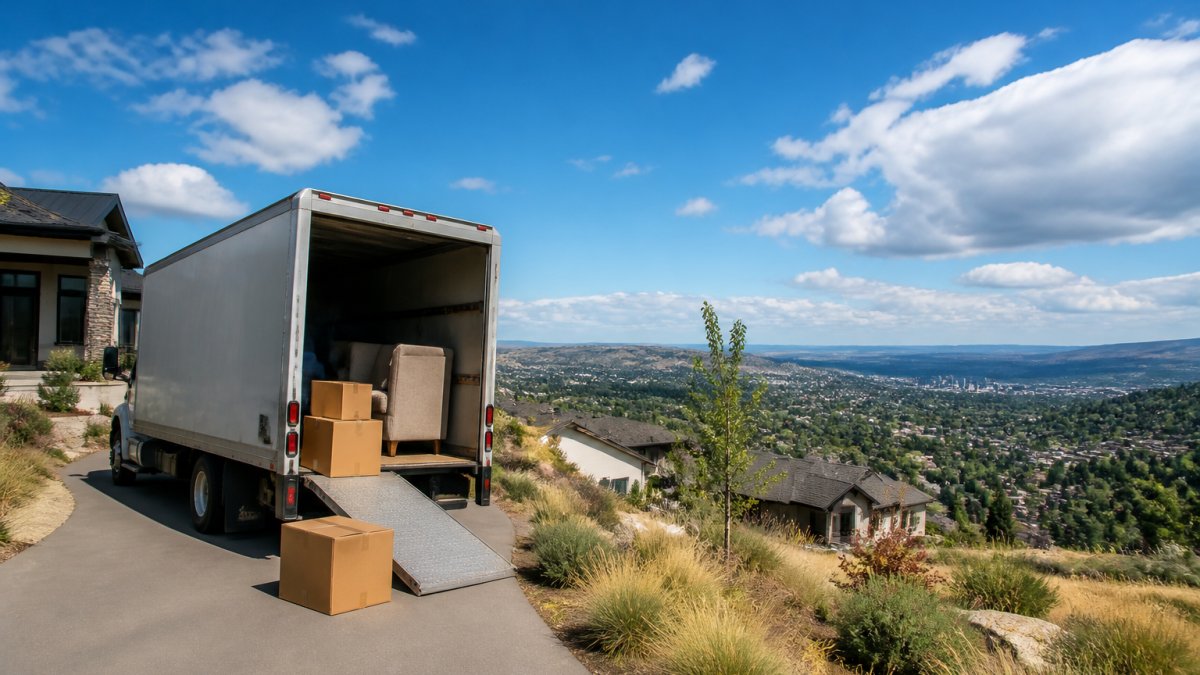
The cost of moving from California to Idaho depends on distance, volume, and how much you do yourself. A long-distance move of this length typically runs into thousands of dollars for a full-service carrier, and quotes vary wildly by season. Get three binding estimates rather than non-binding ones: non-binding quotes are the most common source of moving-day surprises, since the final price is set by actual weight and access conditions.
Best Places to Live in Idaho for Newcomers
The best places to live in Idaho for newcomers cluster around the Treasure Valley and Northern Idaho, and the right pick depends on whether you want job access or scenery.
Boise and the Treasure Valley
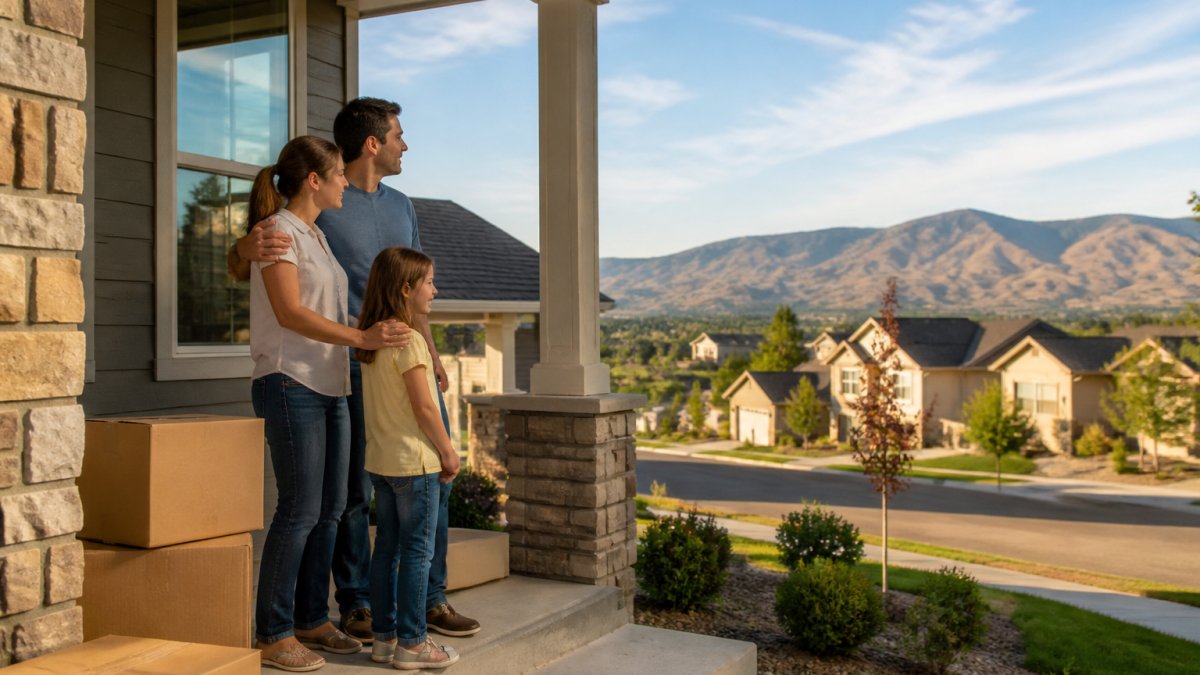
Boise anchors the region, with Meridian, Eagle, Kuna, Star, Middleton, Nampa, and Caldwell forming the surrounding communities. Eagle and Meridian lean suburban and newer, while Nampa and Caldwell offer more space for the money. Scott Pearce works across all of these markets, which matters when comparing neighborhoods you have never visited: the North End and the Bench sit minutes apart but trade at very different price points.
Coeur d'Alene and Northern Idaho
Coeur d'Alene and Northern Idaho suit buyers who prioritize water, forests, and a smaller-town pace. The trade-off: a thinner job market, longer drives to employment centers, and colder, snowier winters than the Treasure Valley.
Moving Checklist for an Interstate Move
A moving checklist for an interstate move keeps a complicated process from becoming a crisis. Work backward from your target arrival date and treat the timeline as fixed.
- 12 weeks out: Set your budget, request three binding moving estimates, and start researching Idaho neighborhoods.
- 10 weeks out: Get pre-approved with an Idaho lender. Out-of-state pre-approvals often need to be re-run.
- 8 weeks out: Schedule the mover, begin decluttering, and gather tax and residency documents.
- 6 weeks out: Make an offer or lock a rental. Schedule the home inspection.
- 4 weeks out: Transfer utilities, update your address, and arrange school records if you have children.
- 2 weeks out: Confirm the moving date, pack essentials separately, and set up a mail forward.
- Move week: Keep a folder with closing documents, IDs, and medication. Do not pack it.
Book your mover in the off-season if your dates are flexible. Summer is peak season for westbound moves, and rates and availability tighten accordingly.
Climate and Seasonal Weather Differences
Climate is the adjustment newcomers underestimate most. Idaho runs four distinct seasons: hot, dry summers in the Treasure Valley and cold, snowy winters, especially in Northern Idaho. Summer heat in Boise can push into the high 90s, and winter cold in Coeur d'Alene regularly drops below freezing. Budget for insulation, snow tires, and a heating system that can handle a real winter.
Employment, Wages, and Healthcare Access
Employment opportunities in Idaho are strongest in healthcare, technology, agriculture, construction, and the professional services that support them. Wages generally run below California levels for equivalent roles, the trade-off for a lower cost of living. Remote workers who keep a California salary have a real advantage that compounds over years of housing payments.
Where the Jobs Are
- Healthcare and social assistance is one of the largest employers statewide, anchored by hospital systems in the Treasure Valley and Northern Idaho.
- Technology and professional services cluster in Boise and Meridian, with a growing remote-worker population that competes for the same housing.
- Agriculture and food processing dominate much of the Magic Valley and rural counties.
Dual-income households do best when at least one earner brings a remote or portable salary. If both earners need local wages, run the budget carefully before you buy.
Healthcare Access and Specialist Availability
Healthcare access is the angle most relocation guides skip, and it often changes a family's decision. Idaho has a solid hospital network in population centers, but coverage thins quickly outside them.
- Treasure Valley. Boise, Meridian, and Nampa have the deepest concentration of hospitals, urgent care, and multi-specialty clinics, with most common specialties available locally.
- Northern Idaho. Coeur d'Alene and the surrounding area have hospital and clinic coverage, but some subspecialties require travel to Spokane, Washington.
- Rural and smaller communities. Primary care may be available, but specialists, certain imaging, and higher-acuity services often require a drive to a regional center.
Before you commit to a town, confirm three things:
- Provider network. Check whether your current insurance plan operates in Idaho and whether your physicians are in network. Some plans have narrow networks in rural counties.
- Specialist availability. If anyone in your household sees a specialist regularly, call that specialty's offices in your target city and ask about new-patient wait times. Wait times vary widely by specialty and location.
- Insurance continuity. If you are keeping a California-based plan, confirm it covers Idaho providers. If you are switching to an Idaho plan, check the open enrollment window and whether your medications are on formulary.
Healthcare is the relocation factor most likely to be discovered too late. Verify network coverage and specialist wait times before you make an offer, not after.
Wages and the Remote-Work Advantage
Wages for equivalent roles generally run below California levels, widest in high-cost coastal occupations; the offset is housing, taxes, and commute time. Remote workers who keep a California salary effectively import the higher wage into a lower-cost market, which is why they have reshaped pricing in Boise and Meridian. If negotiating a remote arrangement, confirm the employer's policy on state income tax withholding, expense reimbursement, and whether the role is tied to a specific office location.
Making the Move: What to Do Before You Arrive
Plan the move before you arrive, not after. The buyers who struggle most treat the move as a logistics problem and the landing as an afterthought.
- Confirm your financing is valid in Idaho
- Verify school boundaries for your target neighborhoods
- Check specialist and hospital access for your household
The households that settle in fastest visited first, rented or short-term leased if unsure, and worked with someone who knows the specific market rather than the state in general. That local knowledge is the difference between buying the right house and buying the available one.
Frequently Asked Questions
Why are people moving from California to Idaho?
The main drivers are housing affordability, lower taxes, and a slower pace of life. California's median home price sits well above Idaho's, and Idaho has lower property tax rates in many counties. Population growth in the Treasure Valley has followed this migration pattern closely, with Census data showing steady inflows from Western states over the past several years.
How much does it cost to move from California to Idaho?
A long-distance move from California to Idaho typically runs several thousand dollars for a full-service mover, depending on distance, home size, and timing. Costs climb during summer months and for moves over 700 miles. Renting a truck and hiring loaders is cheaper but requires more of your own labor. Get at least three written moving estimates and confirm whether the quote is binding or non-binding before you commit.
What is the cheapest way to move from California to Idaho?
The lowest-cost option is usually renting a truck, packing yourself, and hiring local labor only for loading and unloading. Decluttering before the move reduces volume and price. Off-peak scheduling, mid-month and mid-week dates, also lowers rates. If your employer offers relocation assistance, use it. Otherwise, compare portable container services against traditional movers, since pricing varies widely by route and season.
Is it worth it to move to Idaho?
For many Californians, yes, especially if housing cost is the deciding factor. A household budget that was stretched in Sacramento or the Bay Area often leaves room for savings in Ada or Canyon County. The trade-offs are real too: colder winters, fewer large-city amenities, and a tighter job market in some fields. Weigh your income prospects and commute against the lower cost of living before deciding.
What should I know before moving from California to Idaho?
Plan your tax residency transition carefully, since Idaho taxes income and California may still claim residency if you keep a home or spend too many days there. Register your vehicles, update your driver's license, and set up utilities before you arrive. Research the specific city, not just the state, because climate, commute times, and school quality vary sharply between Boise, Caldwell, and Coeur d'Alene.
How do I choose a place to live in Idaho?
Start with your budget and commute. The Treasure Valley, including Meridian, Nampa, and Kuna, offers the most inventory and job access. Coeur d'Alene suits buyers who want lake access and can work remotely. Visit in both summer and winter before committing, since summer heat in the Treasure Valley and winter cold in the north feel very different from California. A local REALTOR® can walk you through neighborhood-level price differences.
Moving across state lines is a financial and emotional decision, and the details that decide whether it works are local: which street, which school boundary, which tax exemption. Scott Pearce is a REALTOR® with Fathom Realty serving Boise and the surrounding Ada and Canyon County communities, including Caldwell, Eagle, Kuna, Meridian, Middleton, Nampa, and Star. Get started with Scott Pearce and find the Idaho home that fits the life you are actually building.